


Forward stock price-to-earnings ratios are above historical averages – but what does this mean for long-term investors?
Following three consecutive years of double-digit market gains, the S&P 500 continues to reach new highs in early 2026, delivering 11.3% to investors through the end of May. 1
While the gains are welcomed, they raise an important question for long-term investors – are stock prices reflecting actual value or is it overexuberance?
This question is made more difficult by the backdrop of ongoing economic and geopolitical concerns—such as elevated government deficits and persistent inflation, making strong market performance feel at odds with the broader environment.
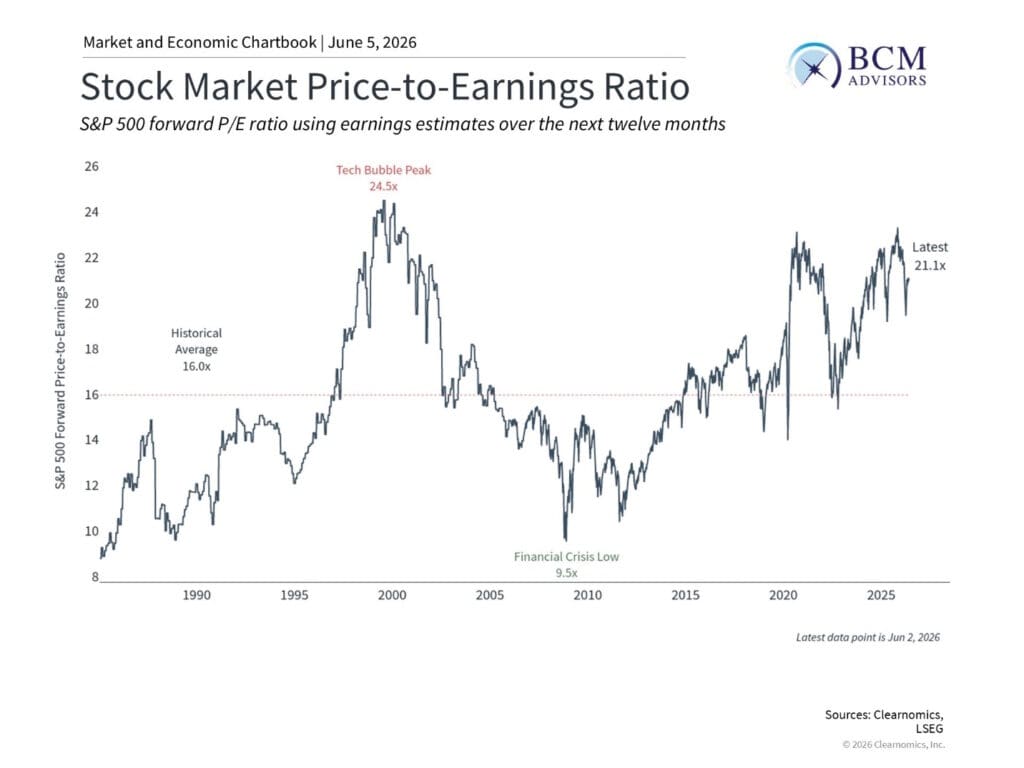
The challenge is that no one can answer this with certainty and this creates a dilemma. Valuations may be fair if earnings growth continues and the economy remains resilient, but if expectations are stretched, history shows that stock market pullbacks can be more pronounced.
So, do you step aside because valuations might be elevated but at the cost of missing possible near-term market growth?
This is where perspective becomes important for long-term investors. While the prospect of severe market downturns is concerning and potentially unavoidable, they can be viewed as an inherent part of market participation when pursuing long-term investment objectives.
Historically, market declines have tended to be shorter in duration than subsequent expansions. Since 1956, the average S&P 500 bear market lasted approximately 14 months while the average bull market lasted about 69 months.2 These figures are based on historical data and do not predict future results.
That doesn’t eliminate the discomfort—but it helps frame it.
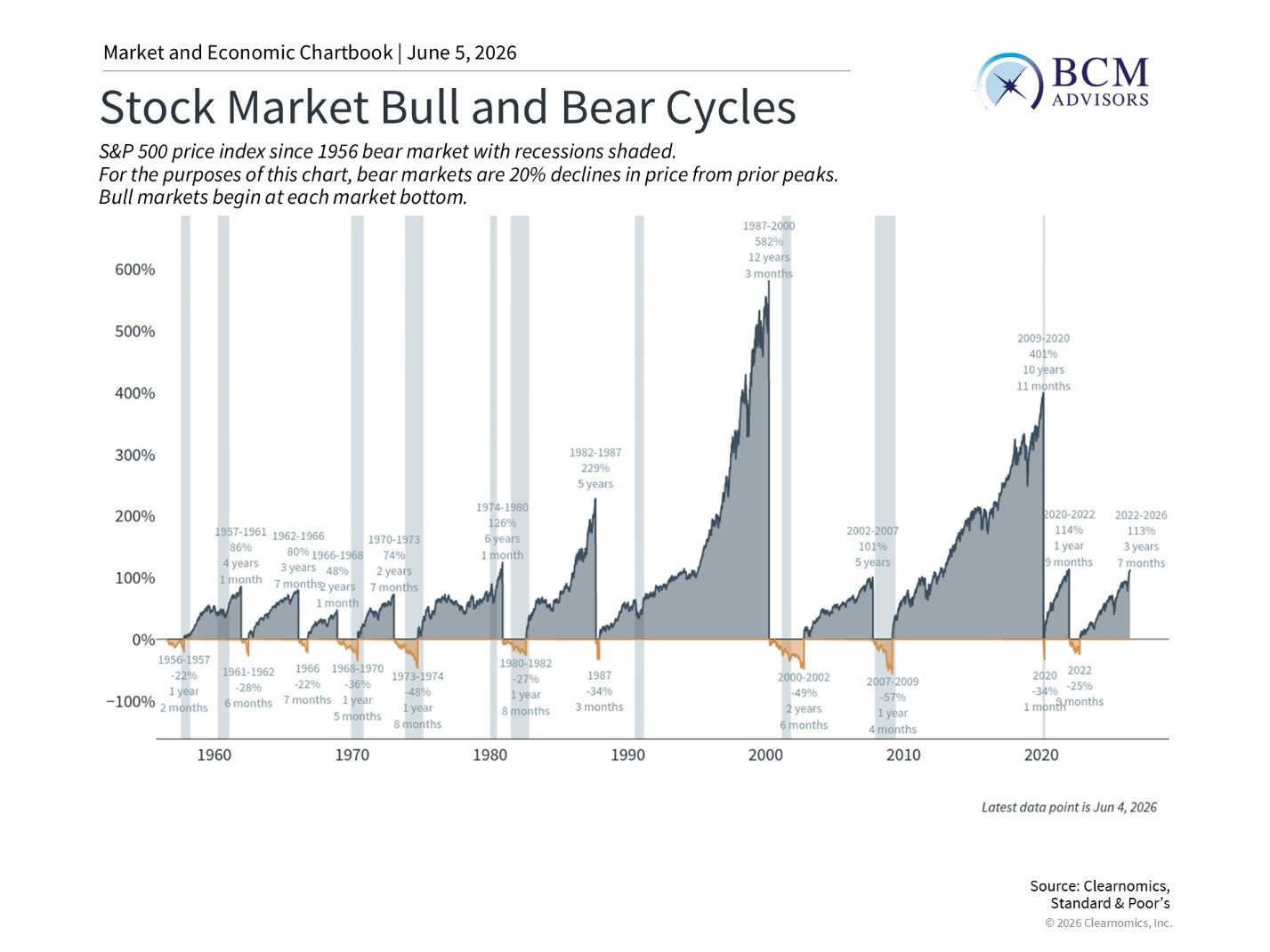
The market may or may not be overvalued. But viewed through a long-term lens, short-term concerns around valuations become easier to frame within a long-term context to stay disciplined and benefit through the complete market cycle instead of reacting to, and trying to forecast around it.
1Source: www.macrotrends.net, Vanguard
2Source: Clearnomics